


September 23, 2026
Five Days at ESCRS 2026: The Clinical and Educational Insights We Are Bringing to Ukraine
Prof. Mykola Gryshchenko, Head of Sona Academy, spent five days at the 44th Congress of the European Society of Cataract & Refractive Surgeons at ExCeL London. Here are the clinical and educational insights that stood out most.
Scroll down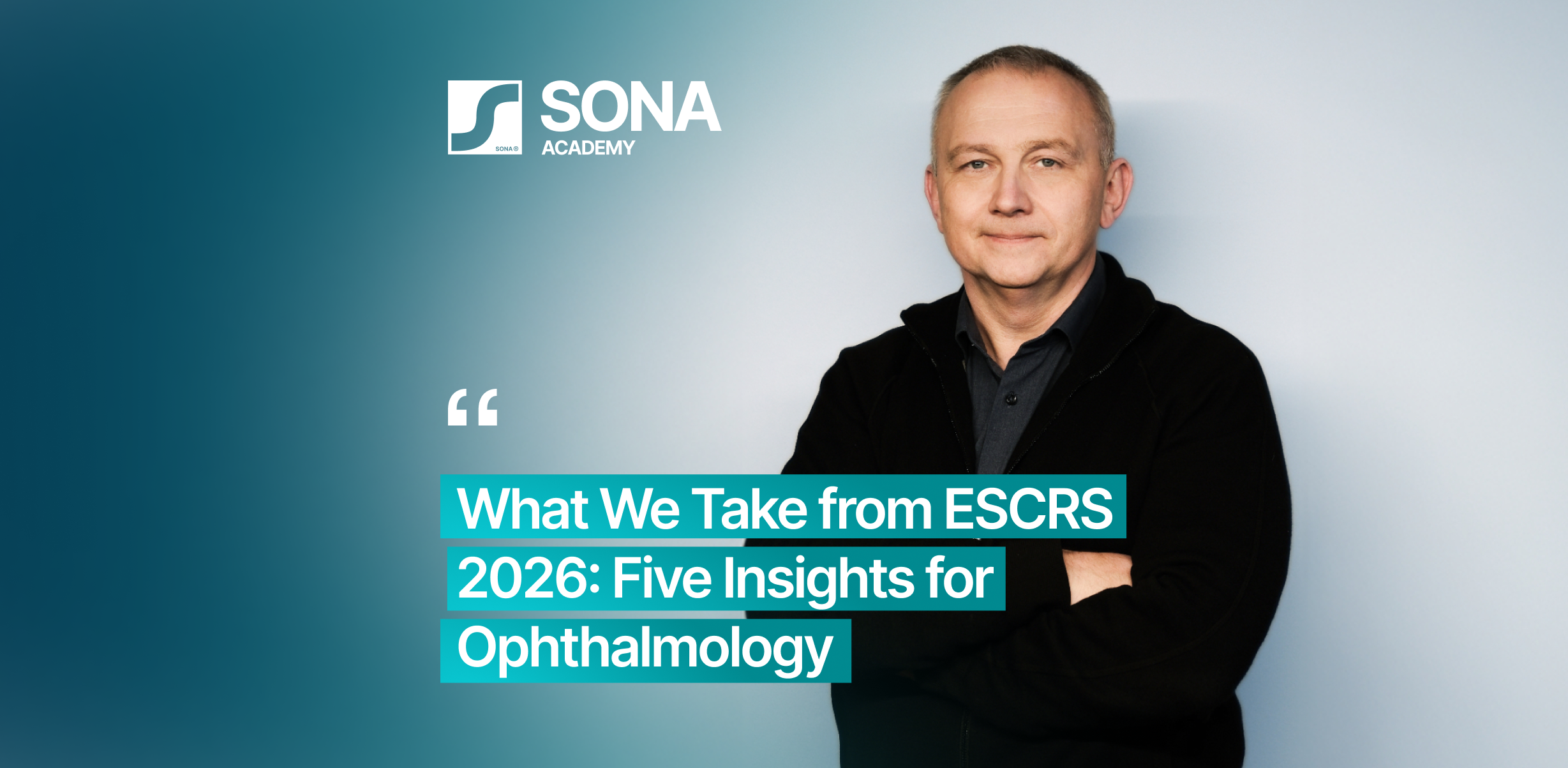
Ocular surface is becoming part of the surgical outcome
Dry eye was discussed not simply as a separate condition, but as a factor that can affect visual outcomes and patient satisfaction after surgery. In one recent series on premium lenses presented at the congress, dry eye was the second most common reason for dissatisfaction after residual refractive error.
This is pushing ocular surface assessment further into the perioperative pathway, including for patients who do not report symptoms.
Preservative-free treatment is gaining importance
The impact of preservatives on the ocular surface came up across several areas of ophthalmology, particularly where long-term topical therapy is required.
Reducing preservative exposure is increasingly part of the discussion around tolerability, ocular surface health and adherence.
Glaucoma care is moving towards earlier intervention
Laser as a first-line option and new procedural approaches were prominent topics at ESCRS.
Their adoption, however, will depend on access to equipment, trained teams, reimbursement and local healthcare systems. Topical therapy will therefore remain central for many patients, keeping long-term tolerability and adherence high on the clinical agenda.
Medical education is becoming more practical
The congress itself offered several useful formats: 90-minute instructional courses, hands-on wetlabs adapted to different levels of experience, a full-day programme for young ophthalmologists and a closing review of the strongest sessions.
Sona Academy will bring these clinical and educational takeaways into its upcoming ophthalmology programmes in Ukraine, combining international expertise with formats designed for real clinical practice. The experience from ESCRS 2026 will inform both the content and the educational approach, with greater emphasis on hands-on learning, clinical reasoning and knowledge that ophthalmologists can apply directly in their everyday work.